
Feature film (science fiction), 95′ – 2024
In a forgotten detention centre built to hold time travellers, an astrophysicist and his team are torn between the fear of change and the empathy they feel for these distant descendants. But what if the boundaries of space and time were about to dissolve? Bigoli Bang is a surreal journey in which romanticism clashes with the humour of the absurd, shot entirely in a crumbling nineteenth-century factory in northern Italy.
Directed by Jérôme Walter Gueguen
Produced by Bigoli Pictures, Aplysia, Casa Capra
Official website https://www.bigolipictures.com/bigoli-bang-1
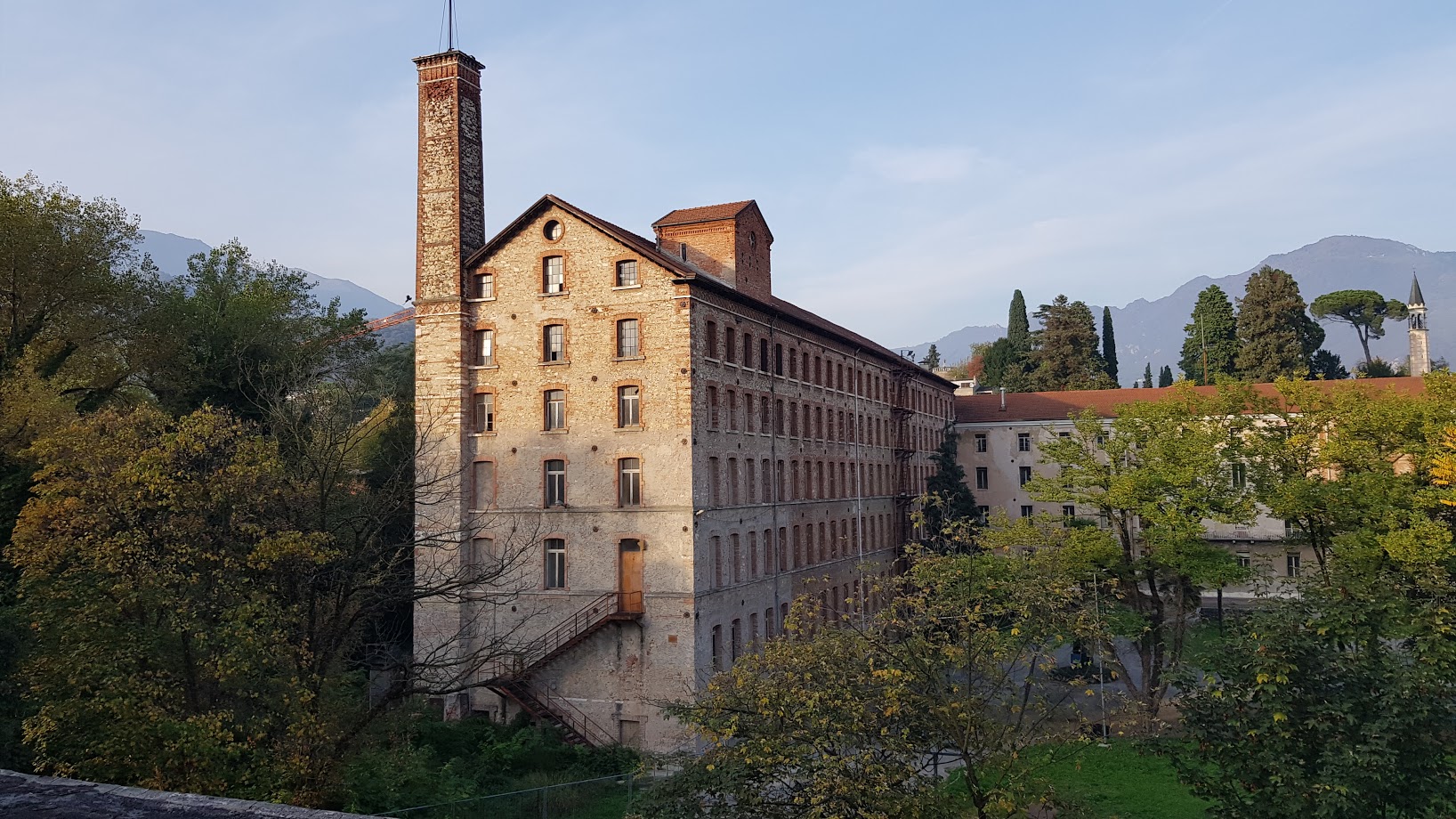
THE LOCATION
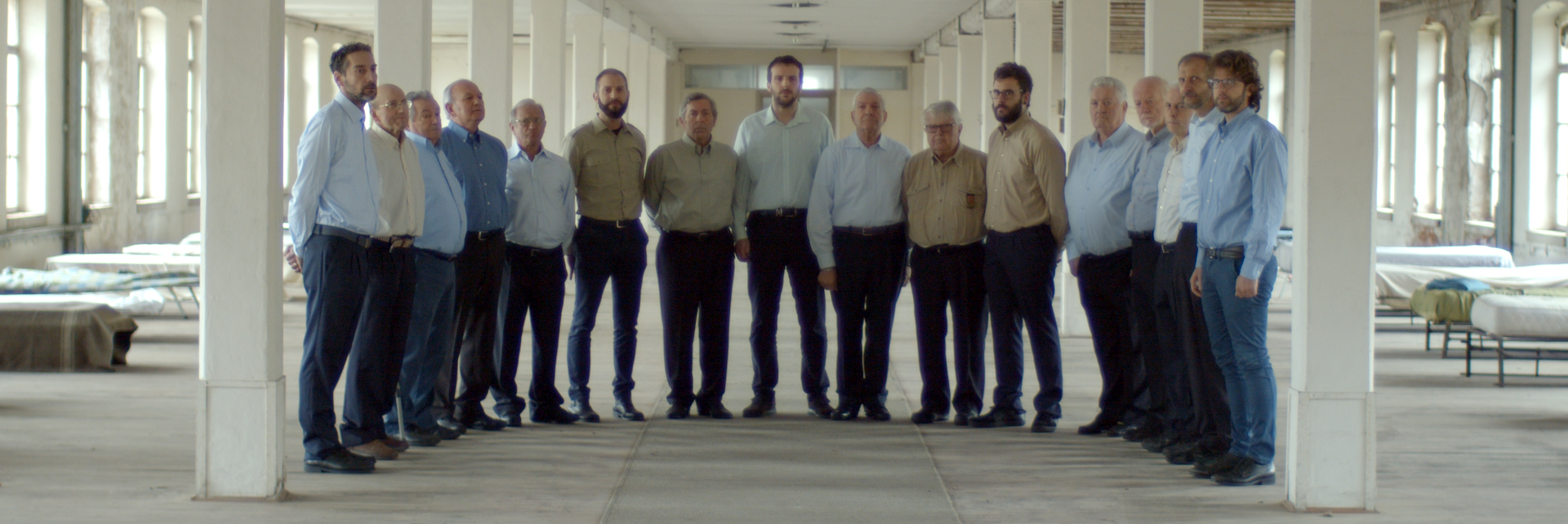
The film was shot entirely in Schio (Vicenza), inside the Fabbrica Alta and its Giardino Jacquard.
An industrial archaeology building erected in 1862 by Alessandro Rossi, the Fabbrica Alta is one of the main symbols of the first Italian industrialisation. Before the advent of Fiat, Lanerossi, with its textile production, was the largest industry in Italy.
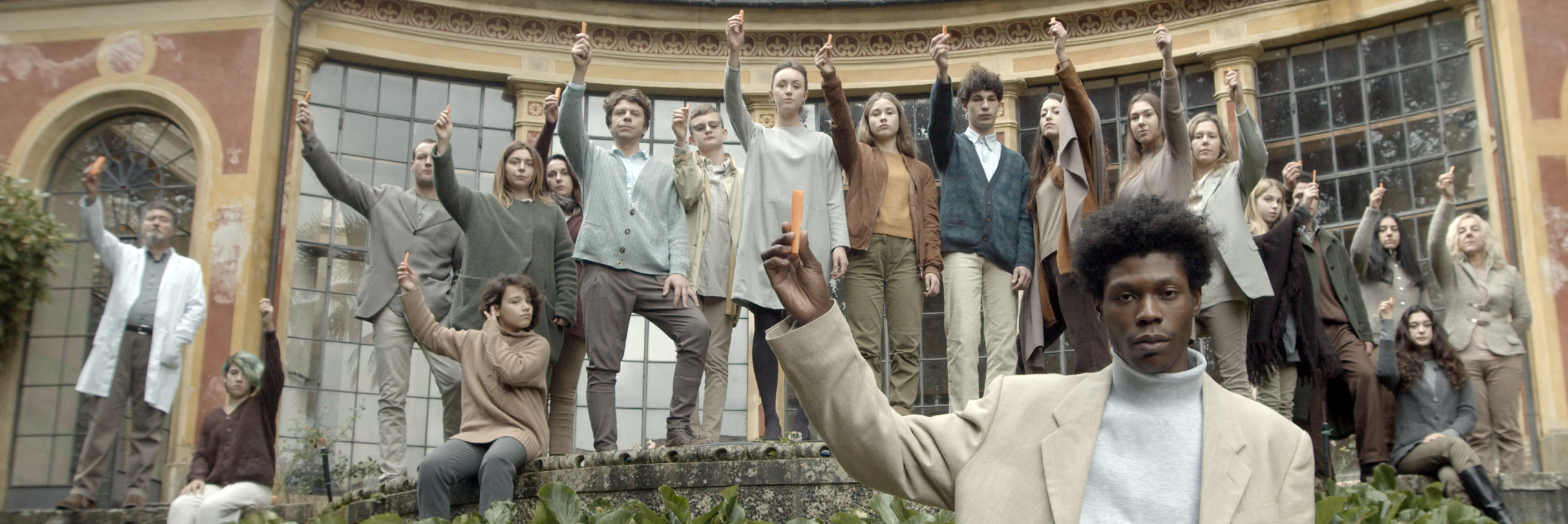
THE CAST
All the characters in the film, apart from three international actors, are played by inhabitants of Schio and the surrounding area. Before shooting, the director held numerous training sessions for the non-professional actors, in order to build the confidence needed to play their characters in front of the camera.
THE TEAM
The director brought with him an international team of professionals. These include the English actors Edward J. Bentley and Dave Phillips, the Spanish director of photography David Palacios and the camera operator Leyre Mira. The rest of the crew was found among local professionals. The shoot was also an opportunity to train young local filmmakers and actors, who could increase their skills in the various film crafts. Bigoli Pictures was officially born from this experience.
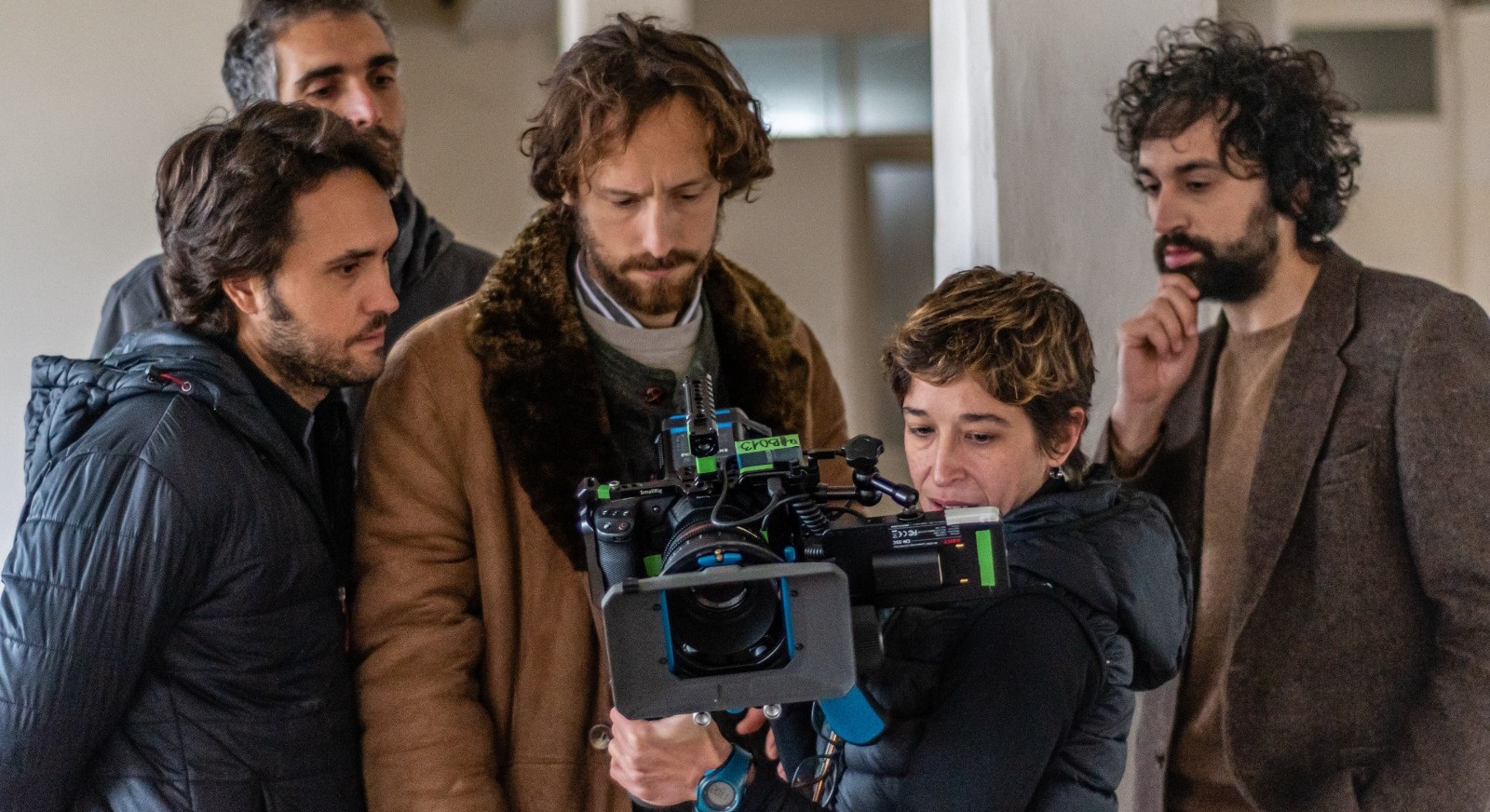
Photo by Luigi De Frenza
THE MUSIC
The music of the film is sung, without the use of any instrument, and gathers pieces performed and recorded live during the shoot. The repertoire includes traditional songs of the Alpini. The effect is alienating: these songs clash with the clandestine condition of the time travellers. The song in the trailer, Benia Calastoria by Bepi De Marzi, sung by the Coro Sojo Rosso, tells of a man’s return home after years of work in Belgium. Electro-acoustic choirs were also performed together with the actors. One of them, for example, picks up the sound of the vacuum cleaner, a recurring element throughout the film.
THE DIRECTOR
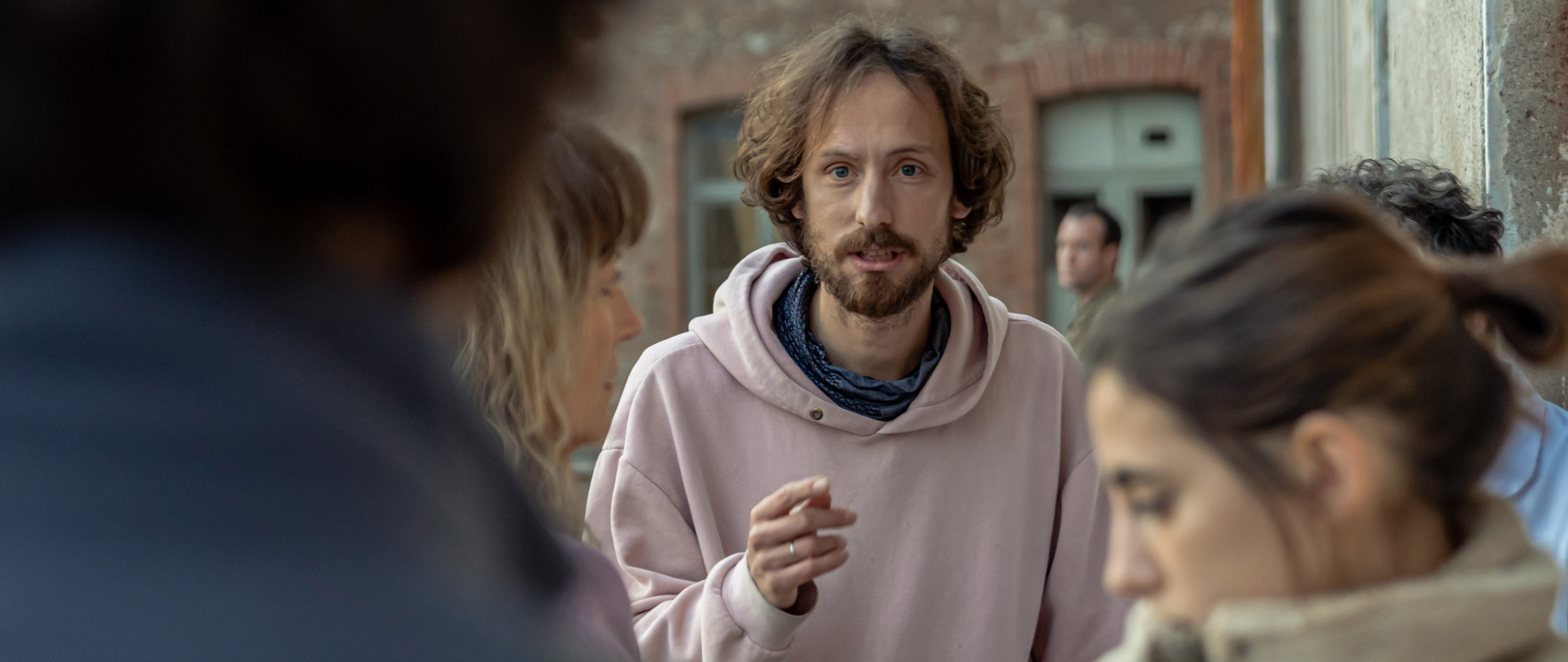
Jérôme Walter Gueguen is a director, actor and screenwriter.
Born in Paris, based in Madrid. Jérôme is an artist, director and actor. Author of films, short films and music videos, and lecturer at the University of Shanghai and Paris 3. A lover of nature and the outdoors, Jérôme prefers exterior shoots in spectacular places, using only natural light. He works with a mix of professional and non-professional actors, teaching and leading acting workshops.
After graduating in film in Paris in 2008, Jérôme moved to Italy to join the award-winning art collective Caucaso Factory in Bologna, giving life to music, performances, photography and short films. His first independent feature, Le sedie di Dio (2014), was selected at the Milano Film Festival and screened at the film archives of Milan and Rome.
In 2019, Jérôme obtained a residency funded by the Veneto Region and the European Union to make a film inside a factory abandoned in the nineteenth century, the Fabbrica Alta in Schio. This is how the project Bigoli Bang: the theory of broken strings was born, in which Jérôme plays one of the characters: Bip.
Director’s notes – Using science fiction to tell a current issue…
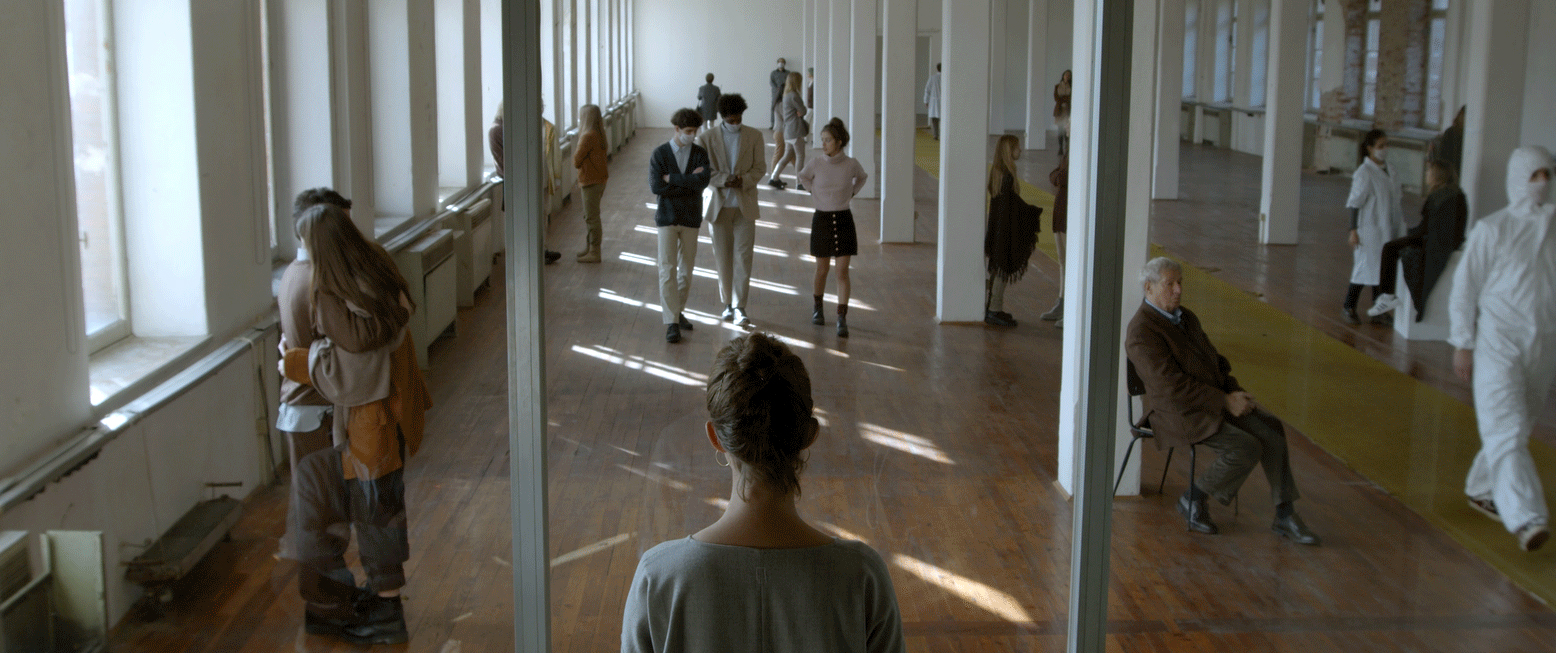
The travellers from the future, once they arrive in the present, are confined in precarious conditions in two dormitories and a garden. During the film we discover that they are escaping from a dystopian future, in search of a better condition of life. But the present is not what they expected.
The travellers interact with the employees of the reception centre, moving between the director’s office, the arrivals hall (where they land), the infirmary, the canteen, the interrogation rooms and the garden. In a claustrophobic and oppressive environment, the stories of the refugees and the guilt of their jailers emerge. One traveller in particular attracts the attention of a mysterious inspector (who will turn out to come from the future), tasked with killing her to prevent the future from changing…
Through these fictional elements, I built a surreal world that offers reflections on an important current issue in a metaphorical and highly cinematic way.
Jérôme Walter Gueguen
DISTRIBUTION AND NEWS
2024 – Schio, Anfiteatro di Palazzo Toaldi Capra, 10 June, 9.30 pm, with the director in attendance (Cinema Pasubio)
2021 – Campaign Bigoli Bang – 2nd act on Produzioni dal Basso, from 9 June, for the last shoots at the Fabbrica Alta (Vicenza Report)
2020 – First crowdfunding campaign on Produzioni dal Basso
2020 – Interview with Jérôme Walter Gueguen on Cinemio
Film pages: Casa Capra, MUBI
The film was developed within the FabricAltra artistic residency (2019-2022), with the contribution of Inn Veneto and the European Union.
THE PRODUCTION
Aplysia was born in 2007 as a network of audiovisual professionals coordinated by project manager and producer Giuseppe Petruzzellis. Since 2020 Aplysia has been registered as a film production company. Over the years many projects have been carried out, with collaborations and co-productions at national and international level. The main focus is on auteur documentary and on anthropological, social, artistic and ecological themes. In parallel, projects have been made in the institutional and commercial sector, music videos, short films, video installations, television series, fiction features and training courses. In the film field there are more than 60 productions made independently or in collaboration, including 16 feature films. Many of these works have won awards and recognition at national and international festivals (Venice Film Festival, Sheffield Doc Fest, Torino Film Festival, CPH:DOX, Visions du Réel, Cinéma du Réel, Hors Pistes – Centre Pompidou), also reaching theatrical and television distribution.
Bigoli Pictures is a team of independent producers, actors, creatives and writers who develop fiction and narrative for film and television. It is made up of director Jérôme Walter Gueguen, English actors Edward J. Bentley and Dave Philipps, Spanish director of photography David Palacios and camera operator Leyre Mira. We are based in Barcelona and Madrid. We create other worlds and write scripts for films that we produce ourselves or offer to other production companies. We believe that imagination is a magic tool that must be trained and used with passion and fun. Fantasy is our ethic.
Casa Capra is an independent exhibition space for artistic research and production curated by Saverio Bonato, located in the Magrè district of Schio, immersed in the places of everyday life: between the newsstand, the grocery and the village bar. The position is not among the most conventional, but it aims to find a different ground, a space generally outside the ordinary art circuits of big cities, to tell new stories through the works of the artists who are part of it.
Since 2020 it is also the Cultural Association Conci, linked to technical support for editorial and audiovisual productions, with various professionals from different sectors taking part.
Bigoli Bang: the theory of broken strings was born within the FabricAltra project, which works on the theme of social innovation in terms of territorial regeneration in the area of the first Veneto industrialisation linked to the textile sector.
The project initiative, already realised in a programme of site-specific cultural and artistic activities, continues to pursue the goal of working on the visibility of the building, on the reworking of a shared memory, and on testing new scenarios of conscious reuse or non-reuse, through a path of reappropriation of the site as a public good, supported by tools linked to artistic practices, audio and video installations, and theatrical narration.
The aim is to continue the cultural regeneration of the Fabbrica Alta, with the involvement in residence of internationally renowned artists around whom to activate training and animation initiatives for the rich social and cultural associative fabric already operating in the area.
New actors are in the field to work on the visibility of the building, so that the space of the Factory becomes a place to live in, to be reappropriated and in which to rework a collective historical memory that is a stimulus for the future and not a crystallisation of the past.
